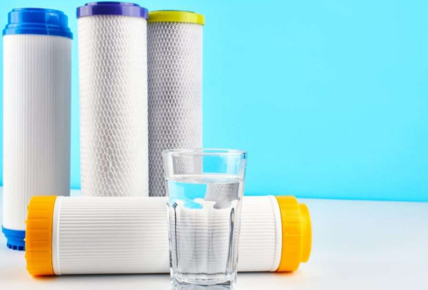


You pour yourself a glass of water. It’s clear, cool, and refreshing. You take a sip and move on with your day. But have you ever paused to wonder—what else is in that glass besides two hydrogen atoms and one oxygen? The answer might surprise you. Or concern you. Or both.
See, water isn’t just water. It picks up things on its journey—minerals, salts, metals, sometimes even bacteria. And that mix, whether good or bad, gets summed up in something we call TDS.
Let’s dig in. This isn’t a science lecture. No jargon. Just real talk about something you drink every single day.
First Things First: What is TDS in Water?
You’ve probably seen this term thrown around on water filter ads or heard someone mumble about it at a dinner party. But what is TDS in water exactly?
TDS stands for Total Dissolved Solids. These solids aren’t chunks floating around—they’re microscopic. They dissolve completely into the water, so you can’t see or feel them. But they’re there.
We’re talking calcium, magnesium, potassium, sodium, bicarbonates, chlorides, sulfates, and a whole cocktail of other stuff. Some are naturally present. Others come from the pipes, soil, or even pollutants the water passes through. And while some TDS components are beneficial, others? Not so much.
So, TDS is basically your water’s ingredient list—just without the pretty label.
Why Should I Care About Total Dissolved Solids?
Here’s the thing: total dissolved solids aren’t inherently bad. Some of them are essential for health. For example, your body needs minerals like calcium and magnesium, which show up in water naturally, especially in “hard” water areas.
But when levels get too high—or when the mix includes harmful substances like lead or arsenic—that’s when it becomes a concern.
High TDS might also affect taste. If your water has that weird metallic, bitter, or salty flavor, you’re probably sipping on a higher-than-usual TDS level. It doesn’t necessarily mean it’s toxic, but it’s a sign that maybe it’s time to test.
And if you’re using tap water for your coffee or tea? Yep, high TDS can ruin that too. Bitter brews, chalky aftertastes—it all starts with what’s dissolved in your water.
TDS Meaning Water: It’s Simpler Than It Sounds
Let’s clear up another common confusion: TDS meaning water is basically referring to the amount of dissolved substances present in your drinking water. That’s it. Nothing complicated.
This number is usually measured in milligrams per liter (mg/L), and you can test it with a TDS meter—which you can easily grab online for less than the cost of lunch. Just dip the probe into your glass, and it gives you a number.
- 0–50 mg/L: Distilled or RO water, very low minerals
- 50–150 mg/L: Ideal for drinking, clean and mineral-balanced
- 150–300 mg/L: Still good, especially for people who prefer “harder” water
- 300–500 mg/L: Acceptable, but taste may be affected
- 500+ mg/L: May not be suitable without filtering or testing further
Some people assume low TDS = better. Not always true. Water with zero TDS has no minerals—and drinking it long-term might not be great for your health. It’s all about balance.
What Does the Number Actually Tell You?
Here’s the catch: TDS is a quantity, not a quality reading.
Let’s say your TDS is 600. That doesn’t tell you what those 600 milligrams of dissolved solids actually are. It could be calcium and magnesium (great!) or nitrates and chlorine byproducts (not so great).
So if your number is high, don’t panic—just dig deeper. Get a comprehensive water test done. Many local labs offer this, or you can find DIY test kits online that break down the specifics.
Think of TDS like a bank statement that shows your total spending. It’s useful, but to really understand what’s going on, you need the itemized bill.
Should You Filter Your Water?
Now we’re getting into decision-making territory.
If your water has high TDS but consists of healthy minerals, you might not need a filter at all. On the flip side, if your TDS is low but your water still has strange odors or tastes, it could be due to contaminants that don’t even register on the TDS scale.
So here’s a rough guide:
- High TDS and bad taste/smell? → Consider a reverse osmosis (RO) system.
- Moderate TDS and clean taste? → Maybe stick with a carbon filter or UV system.
- Low TDS but weird water quality? → Get a detailed test. TDS isn’t the whole story.
Don’t just buy the most expensive filter system you can find. Match your filter to your actual water needs. You’ll save money—and get better-tasting water.
Bottled Water vs Tap Water: Which One Wins?
Bottled water companies love to market “purity.” But here’s the thing: some bottled waters have a TDS of over 400 mg/L. Others are essentially just filtered tap water.
And speaking of tap water, if your municipal supply is well-regulated, it might be cleaner than you think. In many places, it’s tested more frequently than bottled brands.
Again—it all comes down to the source. And no, there’s no shame in testing bottled water too. Your health deserves that attention.
Real Talk: My TDS Story
Let me get a little personal. I used to ignore this stuff completely. My water tasted fine. Why dig deeper?
Then one day, my espresso machine broke down. Turned out it was crusted with mineral buildup. That led me to buying a TDS meter out of curiosity. My water clocked in at 750 mg/L. That was… a wake-up call.
After a lab test and a few tweaks—mainly adding a good-quality RO system and switching to a more balanced re-mineralizer—my TDS came down to 90. My coffee? Better than ever. And I’ve weirdly started enjoying just plain water again.
Wrapping It Up: It’s Water, but It’s Not Just Water
We take water for granted. It’s always there, always flowing. But the more I’ve learned about it, the more I’ve realized: small changes in water quality can quietly affect everything—from your health to your morning coffee.