There’s a certain comfort in knowing that your household has a dependable supply of drinking water. But when was the last time you actually had that water tested? It’s a question many homeowners don’t consider until something unexpected happens. Perhaps a neighbor discovers bacteria in their private well, or heavy rainfall raises concerns about groundwater contamination.
For households facing microbial concerns, ultraviolet treatment for microorganisms offers an effective disinfection method when equipment is appropriately selected, installed, and maintained.
Unlike treatment methods that rely on chemical disinfectants, ultraviolet technology uses light to inactivate susceptible microorganisms. It’s a fascinating process, but its effectiveness depends on more than simply installing a lamp. Water conditions, equipment performance, and routine maintenance all play important roles.
Why Clear Water Isn’t Always Safe Water
We’re naturally inclined to trust water that looks clean and tastes fresh. Unfortunately, potentially harmful microorganisms don’t necessarily produce visible changes or unpleasant odors.
Private well owners should be particularly mindful of this issue. Groundwater quality can change because of flooding, damaged well components, agricultural activities, or other environmental influences.
Even a well that’s provided water for decades without noticeable problems may experience contamination.
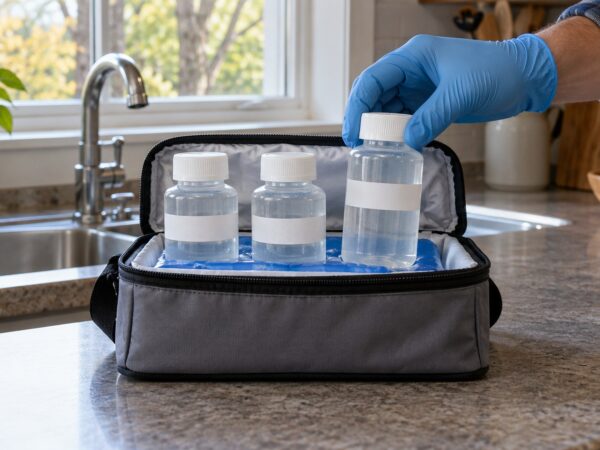
Appropriate laboratory testing helps identify microbial concerns that would otherwise go unnoticed.
If bacteria are detected, investigating their source is equally important. Repairing damaged well components or correcting drainage problems may be necessary alongside water treatment.
The goal should be addressing contamination responsibly rather than relying entirely on equipment to manage its consequences.
How UV Technology Helps Inactivate Microorganisms
Ultraviolet disinfection works quite differently from traditional particle filtration. Instead of trapping microorganisms inside a cartridge, it exposes flowing water to a controlled dose of ultraviolet light.
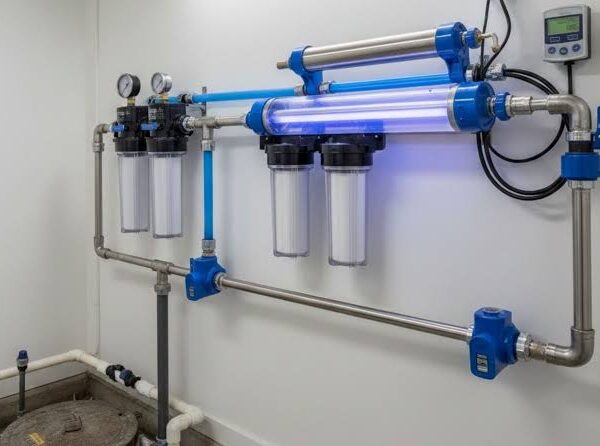
Modern UV systems for water treatment typically contain a specialized lamp housed within a protective sleeve inside a treatment chamber.
Ultraviolet light damages the genetic material of susceptible microorganisms, preventing them from reproducing effectively. Under suitable conditions, this process can inactivate various bacteria, viruses, and protozoa.
One advantage is that the process doesn’t introduce chemical disinfectants or significantly alter the mineral composition of the water.
However, an adequate ultraviolet dose must reach the microorganisms. Water clarity, exposure time, and lamp performance are therefore essential considerations.
Preparing Your Water for Effective UV Treatment
Imagine trying to shine a flashlight through a glass filled with muddy water. The light won’t travel through it as easily as it would through a clear glass.
A similar principle applies to ultraviolet disinfection.
Suspended particles can interfere with light transmission, while excessive iron and hardness may contribute to deposits forming on the lamp’s protective sleeve.
Appropriate preliminary filtration helps create conditions in which ultraviolet equipment can operate effectively.
Depending on water testing results, additional treatment may include particle filtration, iron reduction, or conventional water softening.
Not every property requires all these components. The most practical arrangement is one designed around actual water conditions rather than an unnecessarily complicated collection of equipment.
Why Equipment Maintenance Is Worth Taking Seriously
Once water treatment equipment is installed, it’s easy to forget about it. Most systems operate quietly in a basement or utility room, away from everyday household activities.
Understanding UV treatment equipment and maintenance requirements helps homeowners preserve reliable disinfection performance and avoid overlooking important servicing responsibilities.
Ultraviolet lamps gradually lose their treatment effectiveness, even when they continue producing visible light.
Protective sleeves may accumulate mineral deposits, reducing the amount of ultraviolet light reaching the water.
Preliminary filters also require periodic replacement.
Follow manufacturer servicing recommendations and keep a record of maintenance dates. Setting a calendar reminder can be particularly helpful when household schedules become busy.
A functioning indicator light alone isn’t necessarily proof that the equipment is delivering adequate disinfection.
Choosing a System That Can Handle Your Household’s Needs
Water consumption varies considerably between households. A busy family with several bathrooms may use substantial amounts of water during the morning rush.
Ultraviolet equipment must accommodate peak flow rates without exceeding its rated treatment capacity.
Before purchasing a system, consider incoming water quality, household demand, installation accessibility, and electrical requirements.
Look for independently verified disinfection capabilities appropriate for your intended application.
Some equipment includes monitoring sensors, replacement reminders, and automatic shutoff features that respond to certain operating failures.
These practical features can make ownership easier and help alert homeowners to problems that might not otherwise be noticeable.
Understanding the Limitations of UV Disinfection
Although ultraviolet treatment offers valuable microbial protection under appropriate conditions, it doesn’t remove every unwanted substance from water.
Dissolved salts, hardness minerals, heavy metals, and chemical contaminants generally require separate treatment methods.
UV disinfection also doesn’t provide a lasting disinfectant residual throughout downstream plumbing.
During power outages, ordinary ultraviolet equipment stops providing active treatment. Homeowners should understand what precautions to take if treatment is interrupted and have access to a safe alternative drinking water supply.
Knowing these limitations helps you use the technology responsibly rather than expecting it to solve every water quality problem.
Making Water Protection an Everyday Priority
Looking after household water quality doesn’t need to become an overwhelming responsibility.
Begin with reliable testing, select suitable treatment equipment, and establish a manageable maintenance routine. Arrange periodic laboratory testing to evaluate whether your treatment system continues addressing identified concerns.
Water is part of countless familiar moments, from preparing breakfast to filling a child’s drinking bottle before school.
Taking practical steps to protect its quality is one of those household investments that may never attract much attention but carries real importance.
And when it comes to something your family depends on every single day, a little preventive care is certainly worth the effort.